Eye-Movement (Oculomotor) Testing
Moving the eyes smoothly and accurately takes coordination across many parts of the brain. After a head injury, subtle changes in that coordination can show up in measured eye movements, even when vision seems fine.
Who this is for: Written for providers considering eye-movement testing for patients and for patients who want to know what it measures.
Key takeaways
- The patient follows targets on a screen. No drops, no contact with the eye, no bright flashes.
- Measures can include tracking accuracy, how quickly the eyes start toward a new point, how precisely they land and how the two eyes work together.
- Results are compared with reference data and never interpreted alone.
- Fatigue, medication or a known eye condition can affect results, so tell the technician.
- It is not a vision exam for glasses. It measures how the eyes move and coordinate.
Why eye movements are measured after head injury
Moving the eyes smoothly and accurately takes coordination across many parts of the brain. After a head injury, subtle changes in that coordination may show up in measured eye-movement performance, even when a patient says their vision seems fine.
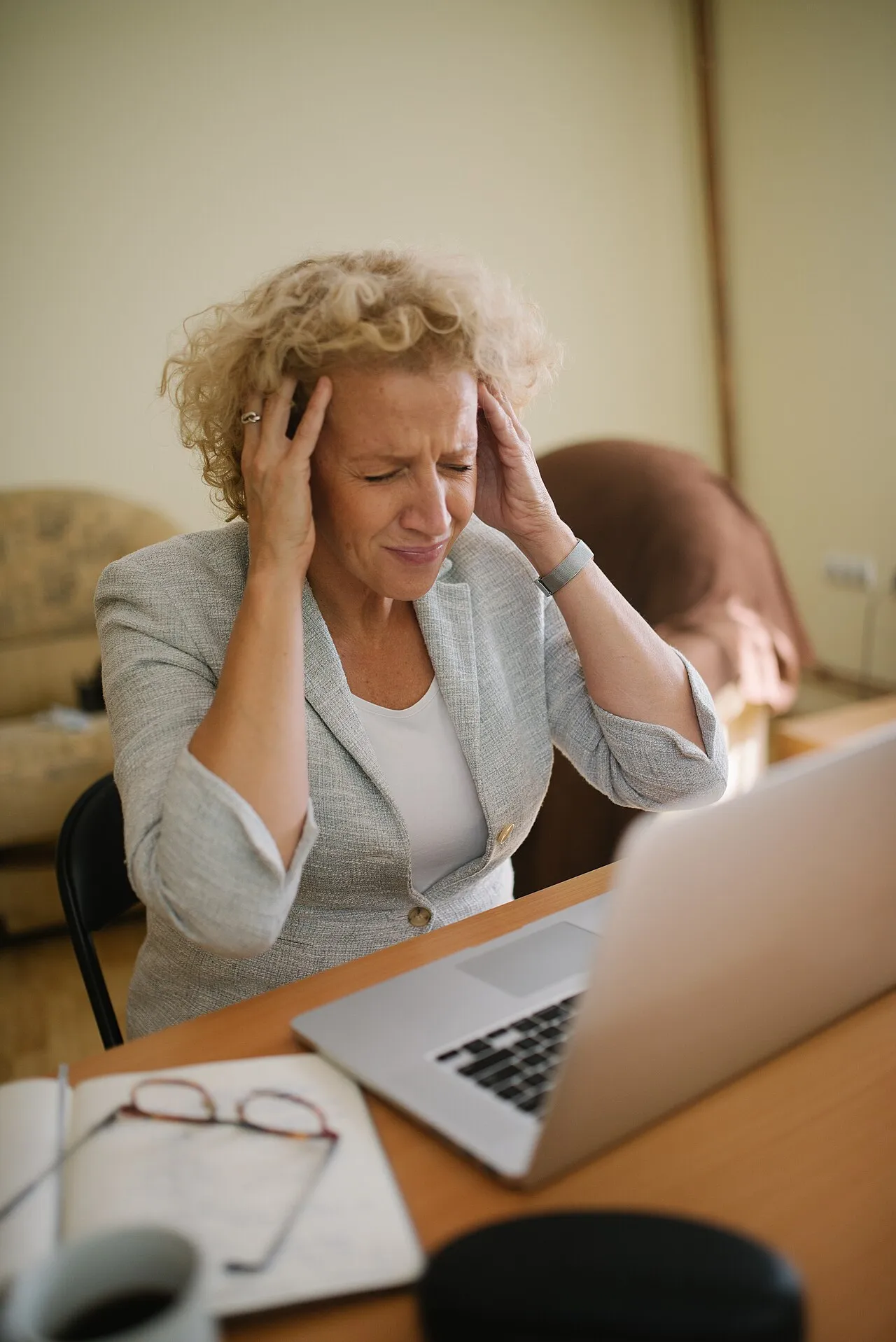
Patients often describe related everyday problems, like losing their place while reading, motion sickness in the car, discomfort in busy stores or tiring quickly at the computer, without realizing these may connect to how the eyes and brain work together.
Losing your place while reading or feeling sick in a busy store may connect to how the eyes and brain work together.
What the patient does
The patient sits comfortably in front of a screen and follows simple instructions: track a moving target, shift their gaze quickly between points or hold it steady. A recording system measures eye position and movement. There are no eye drops, no contact with the eye and no bright flashes. Glasses or contacts are worn as usual, and patients sensitive to screens can ask for short breaks.
What gets measured
Depending on the protocol, measures may include how accurately the eyes follow a moving target, how quickly they start toward a new point, how precisely they land and how well both eyes work together. Results are compared with reference data, and our reports describe them in plain clinical language.
Related in this series: Eye-Movement Testing After a Head Injury: What It Measures, Sample Report Walkthrough (Synthetic Example) and Physician-Reviewed Diagnostic Reports. For the full overview, start with our guide, TBI Diagnostics: What Tests and Reports Show.
How results are interpreted
The neurologist considers eye-movement findings alongside neurocognitive results, other measures and the symptom history supplied by the referring provider. A single result outside the expected range may have several explanations, including fatigue, medication or a pre-existing vision condition. Context matters.
Eye-movement findings are never interpreted alone.
How providers use the findings

Findings may inform a treating provider's decision to refer to a neuro-optometrist, vision therapist or vestibular therapist, or to adjust activities and screen time. Those decisions belong to the provider. Braintree can help coordinate specialty evaluations. We diagnose. You treat.
Who may benefit
Common candidates include patients with ongoing headaches tied to reading or screens, dizziness, motion sensitivity, blurred or double vision, or trouble concentrating after a crash.
Emergencies
Sudden vision loss, new double vision with a severe headache, or weakness is an emergency. Call 911.
Frequently asked questions
Does it test whether I need glasses?
No. It measures how the eyes move and coordinate.
What if I have a known eye condition?
Tell the technician and your provider. The neurologist considers it during interpretation.
Can I drive afterward?
Most people feel the same as before, but follow your provider's guidance about driving while you have symptoms.
How long does it take?
It is one part of a visit that typically takes 30 to 60 minutes.
We diagnose. You treat.
Fully mobile across Florida: we test at the patient's home, at any of 40+ service locations across Florida, or at your office. Mobile, physician-reviewed concussion and TBI diagnostics for Florida providers and their accident patients. Reports go to a neurologist ahead of the neuro evaluation; the referring provider then receives a copy for advanced imaging and treatment recommendations.
Book a 15-minute callRefer a patientOr call 813-709-3771
Sources
- CDC: Symptoms of mild TBI and concussion, including danger signs
- TRACK-TBI (Transforming Research and Clinical Knowledge in TBI), UCSF
- MedlinePlus (NIH National Library of Medicine): Concussion
This article is educational and is not medical or legal advice. If this is a medical emergency, call 911.