TBI Testing for Physical Therapists
Physical therapists often see the first clues: dizziness with head turns, a home program forgotten between sessions, a headache under the clinic lights. Braintree brings standardized testing to your clinic, and the plan of care stays yours.
Who this is for: Written for physical therapy clinics deciding whether and how to add concussion testing for accident patients.
Key takeaways
- PTs see accident patients more often, and for longer, than almost any other provider.
- Consider referral when cognitive, visual, vestibular or sleep complaints persist, or when symptoms stall while the orthopedic injury improves.
- You do not need to settle the question of concussion yourself. Document what you see and connect the patient with evaluation.
- Testing needs only a quiet room with a door. The gym keeps running.
- The physician-reviewed diagnostic report supports your clinical decisions within your scope. You remain the treating therapist.
What PTs bring to concussion recognition
Physical therapists see accident patients more often, and for longer sessions, than almost any other provider. Over several weeks you watch how a patient handles multi-step instructions, position changes, visual tasks and exertion. That gives you an unusually clear view of problems a brief office visit can miss: the patient who forgets their home program from one session to the next, who gets dizzy turning their head during cervical exercises, or who has to stop because the clinic lighting triggers a headache.
Over weeks of care, you see problems a brief office visit can miss.
When a referral makes sense

Consider referring when cognitive, visual, vestibular or sleep complaints persist beyond the first weeks after injury, when symptoms stall while the orthopedic injury is progressing, when exertion consistently triggers headache or fog, or when family members describe changes at home. You do not need to settle the question of concussion yourself. The aim is to document what you see and connect the patient with standardized evaluation.
How referral works from a PT clinic
Referral pathways for PT practices depend on the clinic's arrangements and the patient's physician involvement. Our team explains the options in a short briefing so your front desk knows exactly which steps to follow. Once a referral arrives, we schedule a testing day at your clinic.
Related in this series: How Physical Therapy Clinics Can Spot a Missed Concussion, How a Mobile Testing Day Works at Your Practice and Referral Guide for Providers (PDF + Page). For the full overview, start with our guide, Provider Guide to TBI Testing.
Testing day in a busy therapy clinic
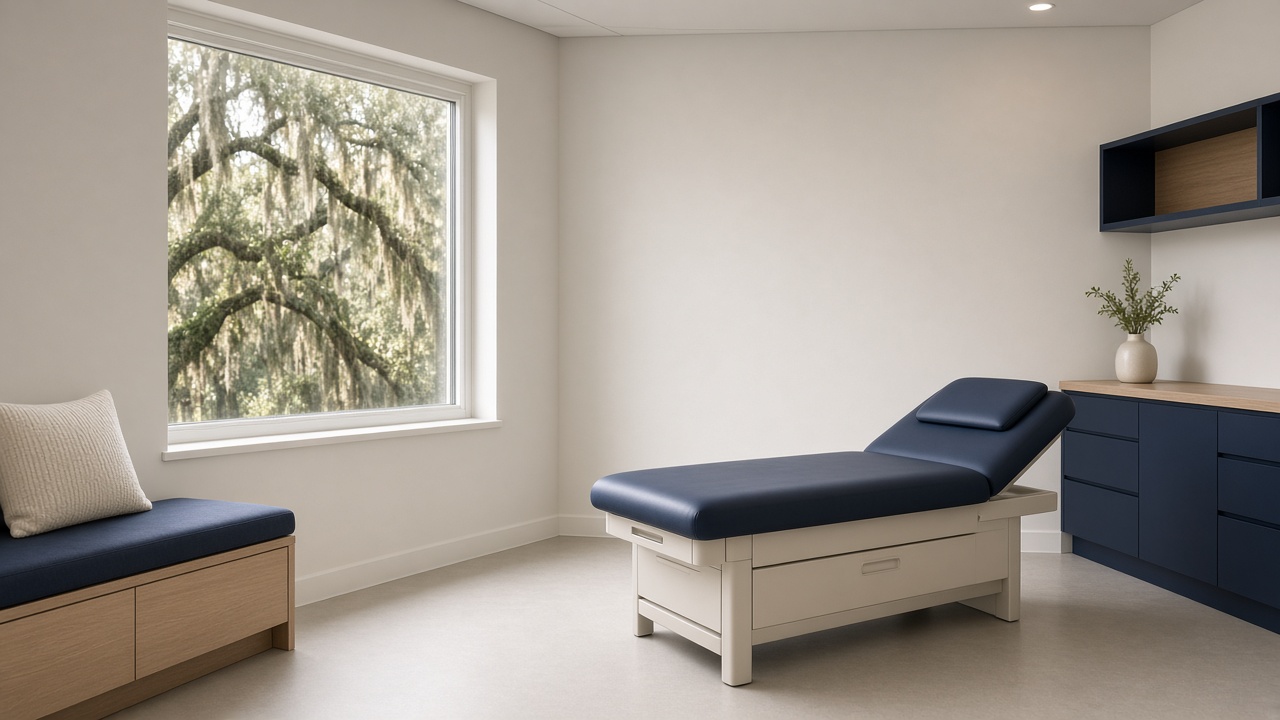
Therapy clinics are often open-plan and noisy, so we ask for a quiet treatment room or office with a door. Our technician sees referred patients one at a time while your gym keeps running. A visit typically takes 30 to 60 minutes, and many patients can be scheduled around their usual therapy appointments.
Patients appreciate being tested in a familiar place, often on the day of their usual therapy visit.
Using the report in your plan of care
The physician-reviewed diagnostic report is interpreted by a neurologist, and your copy gives you standardized findings to discuss with the patient. Depending on the findings and your scope, it may inform your own decisions about vestibular or oculomotor work, exertion pacing, or coordination with vision, neurology or neuropsychology specialists. Braintree helps coordinate specialty evaluations when indicated. You remain the treating therapist.
Questions PTs ask
- Do we need special training or equipment? No. Our technician brings everything and runs the tests.
- Will patients be pulled away from therapy? No. We provide diagnostics only.
- How do we explain it to patients? As a set of non-invasive tests, done at our clinic, that measure how the brain is functioning after the accident, with results interpreted by a neurologist.
Emergency red flags
Any patient with a worsening headache, repeated vomiting, a seizure, new weakness, slurred speech or increasing confusion needs emergency care, not a scheduled test. Call 911.
Frequently asked questions
Do we need special equipment?
No. The technician brings everything; you provide a quiet room.
How does the report fit our plan of care?
It adds standardized findings; the treating provider decides what to do with them.
We diagnose. You treat.
Mobile, physician-reviewed concussion and TBI diagnostics for Florida providers and their accident patients. Reports go to a neurologist ahead of the neuro evaluation; the referring provider then receives a copy for advanced imaging and treatment recommendations.
Book a 15-minute callRefer a patientOr call 813-709-3771
Sources
- CDC: Symptoms of mild TBI and concussion, including danger signs
- Seabury SA et al. Follow-up care after ED presentation for mild TBI and concussion: results from the TRACK-TBI study. JAMA Netw Open. 2018 (NIH PubMed)
- TRACK-TBI (Transforming Research and Clinical Knowledge in TBI), UCSF
This article is educational and is not medical or legal advice. If this is a medical emergency, call 911.