How a Mobile Testing Day Works at Your Practice
One quiet room, one technician and a morning on the calendar. A Braintree testing day lets your practice see several referred patients while your own schedule carries on as usual.
Who this is for: Written for practice managers planning their first or next Braintree testing day.
Key takeaways
- A technician brings portable equipment, sets up in a room you choose and sees referred patients in turn.
- A small, quiet room with a door, a table, two chairs, an outlet and controllable lighting works best.
- Group referred patients on the same day, remind them the day before and build in a small buffer.
- Reports typically return within 48 hours, or typically 7 to 10 days when labs are included.
- A standing monthly date makes referring easy for your staff.
What a testing day looks like
On a scheduled day, a Braintree technician arrives at your practice with portable equipment, sets up in a room you have set aside and sees each referred patient in turn. Each visit typically takes 30 to 60 minutes. Your providers keep treating, and your front desk checks patients in as it would for any appointment. When the last patient is done, the technician packs up and leaves the room as they found it. The goal is for the day to feel routine.
The goal is for the day to feel routine for your team.
Choosing the right room
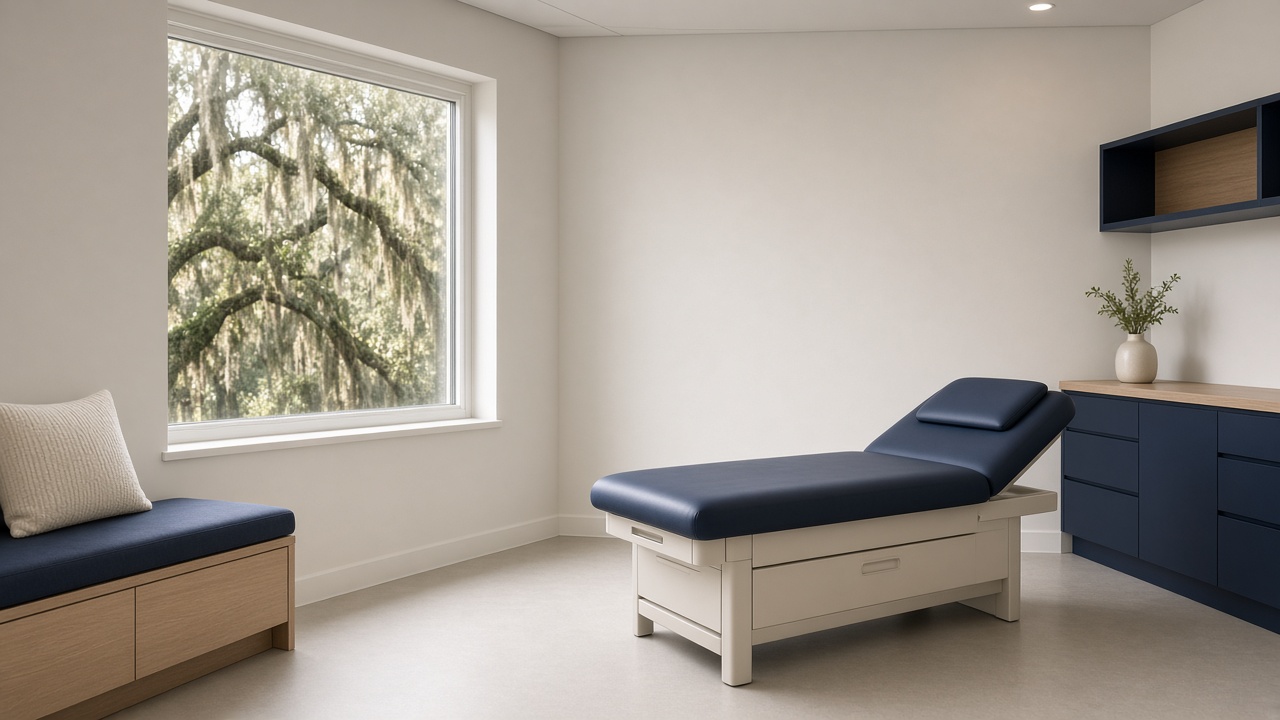
A small, quiet room with a door works best: an empty treatment room, a consultation office or a conference room. It needs a table, two chairs, a power outlet and lighting that can be dimmed or controlled. Avoid rooms next to loud equipment, gyms or busy hallways, because noise and interruptions can affect testing. If space is tight, tell us. We will work with what you have.
Scheduling patients
Our team works with your front desk to set a date and a patient schedule. Grouping referred patients on one day is efficient for everyone. Ask patients to arrive a few minutes early, remind them the day before and build in a little buffer for anyone who needs breaks.
Related in this series: Become a Provider Partner, What Paperwork Is Needed to Refer a Patient for TBI Testing and TBI Testing for Physical Therapists. For the full overview, start with our guide, Provider Guide to TBI Testing.
Preparing staff and patients
Brief your front desk so they can answer basic questions: testing is non-invasive, takes place in your office and results go back to the provider. Give them our number for anything else.
Remind patients to sleep normally, eat beforehand, bring glasses and a medication list and arrive with clean, dry hair for the brain-activity recording. Let them know the technician will not interpret results. Their provider will.
The technician does not interpret results. The provider does, with the physician-reviewed report in hand.
After the day

Reports return to the referring provider after physician review, typically within 48 hours, or typically 7 to 10 days when lab work is included.
Troubleshooting common hiccups
If a patient does not show, tell the technician right away so the schedule can shift. If a patient arrives feeling very unwell, the technician may reschedule rather than test under poor conditions.
Making it routine
Many practices settle into a rhythm, such as a standing monthly date, so staff can refer as patients come up and always know when the next opening is. Call 813-709-3771 to plan your first testing day.
Frequently asked questions
What kind of room do we need?
One quiet room with a desk, two chairs, an outlet and lights that can be dimmed.
How many patients can we schedule?
It depends on your volume. Each visit typically takes 30 to 60 minutes; we plan the day with you.
What if a patient no-shows?
Tell your coordinator; we work with you to fill or reschedule the slot.
We diagnose. You treat.
Mobile, physician-reviewed concussion and TBI diagnostics for Florida providers and their accident patients. Reports go to the treating provider, who decides care.
Book a 15-minute callRefer a patientOr call 813-709-3771
Sources
- CDC: Symptoms of mild TBI and concussion, including danger signs
- TRACK-TBI (Transforming Research and Clinical Knowledge in TBI), UCSF
- MedlinePlus (NIH National Library of Medicine): Concussion
This article is educational and is not medical or legal advice. If this is a medical emergency, call 911.