Languages & Accessibility
Concussion testing depends on understanding instructions and describing symptoms clearly. Here is how we plan for language, disability and comfort before testing day.
Who this is for: Written for patients who need language support or accommodations, their families, and the front-desk teams who schedule them.
Key takeaways
- Tell us about language, vision, hearing, mobility or learning needs before the visit, so we can plan for them.
- Family members, especially children, should not interpret during clinical testing. Qualified interpreters protect accuracy.
- Bring and use glasses, contacts or hearing aids.
- Breaks are built in, and testing can be paused and rescheduled if a patient is too unwell to continue.
- Call 813-709-3771 or note accommodations on the referral form.
Why accessibility affects accuracy
Every patient deserves an accurate evaluation, whatever their language, disability or comfort with technology. Many of the tasks in a concussion evaluation depend on following spoken or written instructions, and the history depends on describing symptoms in detail. When a patient cannot fully understand or be understood, results can be harder to interpret. Planning ahead is how we protect the quality of the evaluation.
Communication barriers can affect results, so we plan for them before testing day rather than on it.
Language support

Florida's patients speak Spanish, Haitian Creole, Portuguese, Vietnamese and many other languages. Referring providers should note the patient's preferred language on the referral, and our team will confirm what support is available for that visit.
Please do not rely on a relative to interpret, and never a child. Relatives can soften or summarize what is said, and clinical testing needs precise wording. Spanish-language patient materials are being prepared and reviewed by native speakers before publication.
Vision and hearing
Some tasks require seeing a screen; others require hearing instructions. Bring whatever you normally use. If you have significant vision or hearing loss, tell us in advance. The neurologist needs to know when interpreting results.
Related in this series: Concussion Testing for Spanish-Speaking Patients in Florida, Patients: What to Expect on Testing Day and Testing Day Preparation Checklist. For the full overview, start with our guide, Recovery, Work and Family.
Mobility and setting
Testing takes place at your own provider's office, so there is no unfamiliar building to find. Let the office know about wheelchair use or other mobility needs so the room can be arranged before you arrive.
A learning difference does not prevent testing. It gives the neurologist context to interpret results fairly.
Learning and cognitive differences
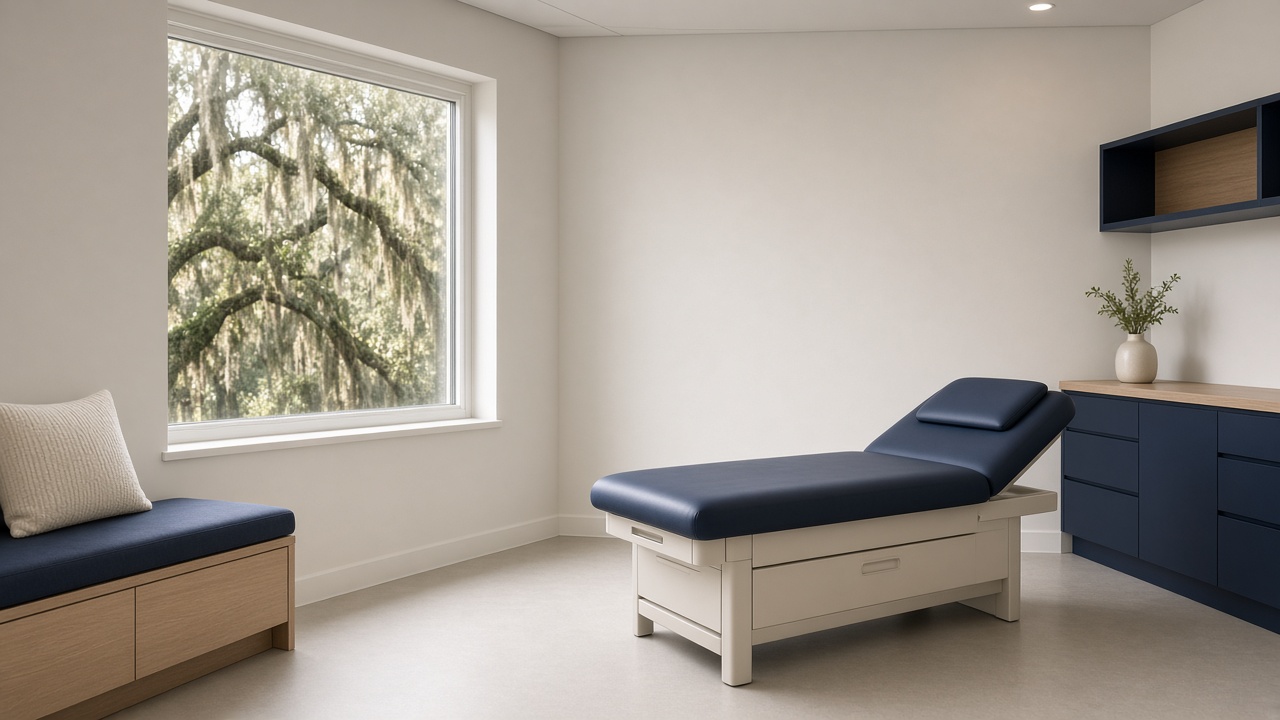
Tell us about learning disabilities, ADHD, autism or intellectual disability. These do not prevent testing. They help the neurologist understand your results in the right context.
Head coverings, hair and cultural needs
Some testing uses sensors placed on the scalp. If you wear a religious head covering, braids, a wig or extensions, mention it when scheduling. Technicians discuss sensor placement respectfully and privately.
Comfort, pacing and support
Anxiety after a crash is common. You may bring a support person, ask questions at any point and take breaks. Some patients tire quickly during concentration tasks; technicians build in pauses and you can ask for more. Large-print copies of the preparation checklist are available on request. Service animals are welcome in accordance with applicable law and the host office's policies.
Emergencies in any language
Anyone with emergency symptoms should call 911. Emergency dispatch services can connect callers with interpreters.
Frequently asked questions
Can my daughter interpret for me during testing?
Please don't rely on a family member, and never a child. Clinical testing needs precise wording. Note your preferred language on the referral and our team will confirm what support is available.
I have ADHD. Will that affect my results?
It can be part of the picture, which is why we ask. It does not prevent testing. The neurologist uses that context when interpreting your results.
What if I get too tired to finish?
Tell the technician. Breaks are built in, and if you are too unwell to continue, testing can be paused and rescheduled.
We diagnose. You treat.
Mobile, physician-reviewed concussion and TBI diagnostics for Florida providers and their accident patients. Reports go to a neurologist ahead of the neuro evaluation; the referring provider then receives a copy for advanced imaging and treatment recommendations.
Book a 15-minute callRefer a patientOr call 813-709-3771
Sources
- CDC: Symptoms of mild TBI and concussion, including danger signs
- TRACK-TBI (Transforming Research and Clinical Knowledge in TBI), UCSF
- MedlinePlus (NIH National Library of Medicine): Concussion
This article is educational and is not medical or legal advice. If this is a medical emergency, call 911.