
Getting Moving Again After a Concussion: A Palm Beach County Guide to Walks, the Gym and Golf
After a crash, it is natural to want to rest until every symptom is gone, or to rush back to the gym. Research points to a middle path. A gentle guide for getting moving again, and the signs that it is time to slow down.
Maybe it was a hard rear-end crash on Southern Boulevard near Wellington, or a sudden stop on the Turnpike. A week later, your husband is restless. He misses his morning walk, his gym class in Palm Beach Gardens and his Saturday round of golf. Part of you wants him to stay on the couch until every symptom is gone. Part of him wants to pretend nothing happened.
This guide explains what research says about rest and activity after a concussion, and offers a gentle way to think about getting moving again. It is general information. Your loved one's provider knows their situation and has the final word.
Key takeaways
- Guidelines suggest about 24 to 48 hours of relative rest, then a gradual return to activity.
- Complete rest beyond about three days is probably not helpful (Silverberg and Iverson, 2013).
- Start easy, add a little at a time, and ease off if symptoms clearly get worse.
- Hold off on activities with a real chance of a fall or a hit to the head until the provider says it is OK.
Rest helps, but only at first
For years, people were told to rest in a dark room until a concussion fully healed. That advice has changed.
Current practice guidelines recommend a short period of relative rest, about the first 24 to 48 hours, followed by a gradual return to normal activities as long as symptoms do not get significantly worse (Silverberg et al., Archives of Physical Medicine and Rehabilitation, 2020). An earlier review concluded that complete rest beyond about three days is probably not helpful (Silverberg and Iverson, 2013).
In one trial of 11- to 22-year-olds seen in an emergency department, those told to rest strictly for five days reported more symptoms, and recovered more slowly, than those given usual care (Thomas et al., Pediatrics, 2015). Light activity that does not make symptoms worse is part of healing, not a threat to it.
A gentle way to build back up
Every recovery is different, so check the plan with the provider first. Many families find these ideas helpful:
- Start with something easy, such as a short, flat walk at a comfortable pace, at a cooler time of day.
- Pay attention to how symptoms feel during and after. A mild, short-lived bump may be OK. A clear jump in headache, dizziness or fog means it is time to ease off.
- Add time or effort a little at a time, not all at once.
- Drink water and avoid the midday sun. Florida heat can bring on headaches on its own.
- Hold off on activities with a real chance of a fall or a hit to the head until the provider says it is OK.
Light activity that does not make symptoms worse is part of healing, not a threat to it.
Golf, pickleball and the gym
Many Palm Beach County families ask about the same few activities. These are questions to bring to the provider, not rules:
- Golf. Putting and chipping are gentle. Full swings, bright sun and long hours on the course can be harder. Some people start at the practice green.
- Pickleball and tennis. Quick turns, fast balls and the chance of a fall make these a step for later in recovery.
- The gym. Easy cardio usually comes before heavy lifting, which can strain the head and neck.
- Swimming and the beach. Calm, supervised water is different from rough surf. Ask before heading out.
Signs to slow down
Stop for the day and rest if exercise brings on a worse headache, dizziness, nausea, blurry vision or a foggy feeling that does not settle. Let the provider know if symptoms keep getting worse instead of better over a week or two.
Where testing fits
If your loved one's provider decides concussion testing makes sense, Braintree's mobile team can test them at that provider's office in West Palm Beach, Boca Raton, Delray Beach, Boynton Beach, Jupiter, Palm Beach Gardens, Wellington or nearby communities. Scheduling is coordinated with the provider, and the results become physician-reviewed diagnostic reports for their care.
Read more on our For Patients page, learn about concussion and TBI testing, or see mobile testing in Palm Beach County. Recent local crashes appear on the Palm Beach County Crash Map.
Frequently asked questions
When can I exercise after a concussion?
Guidelines suggest a short period of relative rest, about the first 24 to 48 hours, then a gradual return to activity as long as symptoms do not get significantly worse. Check the plan with your provider.
Is walking good after a concussion?
For many people, a short, easy walk is a good first step once the first day or two have passed, as long as it does not make symptoms clearly worse.
Can you play golf after a concussion?
Ask your provider. Gentle putting and chipping are often easier than full swings and long hours in the sun.
Is complete rest the best treatment for a concussion?
No. Research suggests complete rest beyond about three days is probably not helpful, and light activity that does not worsen symptoms supports recovery.
Can my family member get concussion testing near West Palm Beach or Boca Raton?
If their provider decides testing makes sense, Braintree's mobile team can test them at that provider's office. Scheduling is coordinated with the provider.
Sources
- Silverberg ND et al. Management of concussion and mild traumatic brain injury: a synthesis of practice guidelines. Arch Phys Med Rehabil. 2020;101(2):382-393
- Silverberg ND, Iverson GL. Is rest after concussion "the best medicine?" J Head Trauma Rehabil. 2013;28(4):250-259
- Thomas DG et al. Benefits of strict rest after acute concussion: a randomized controlled trial. Pediatrics. 2015;135(2):213-223
- CDC: What to do after a mild TBI or concussion
- CDC: Symptoms of mild TBI and concussion (including danger signs)
- NIH, National Institute of Neurological Disorders and Stroke: Traumatic brain injury
- Florida Department of Health: Florida trauma centers (updated July 23, 2026)
- Health Care District of Palm Beach County: Trauma centers
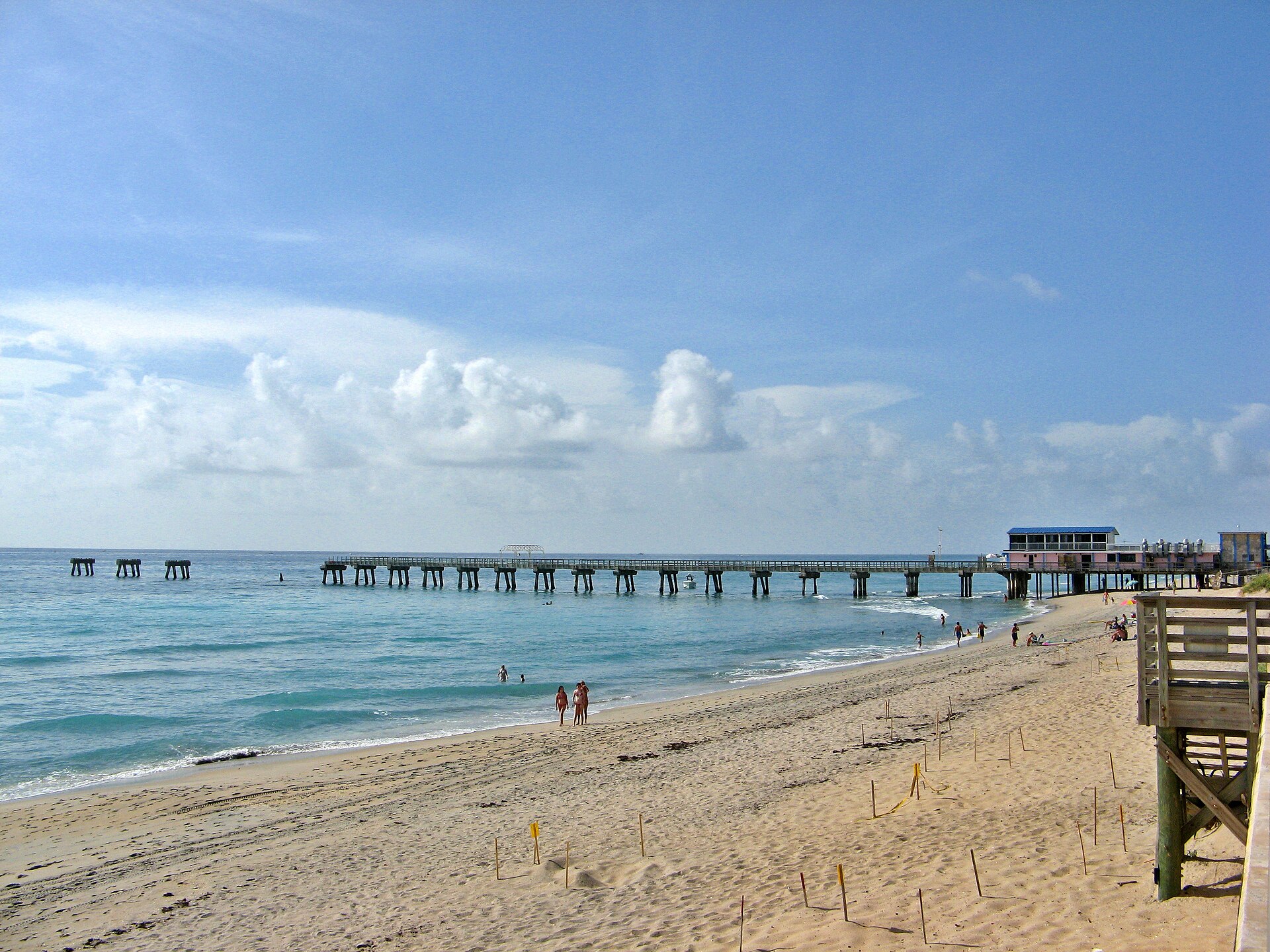
Photo credits: Walking trail at Riverbend Park, Jupiter, by Dough4872, CC BY-SA 4.0, via Wikimedia Commons. Lake Worth Pier by Eighties1980 at English Wikipedia, CC BY 2.5, via Wikimedia Commons.
This article is educational and is not medical or legal advice. If this is a medical emergency, call 911.