
"Denies LOC" Is Not the End of the Story: Concussion Without Loss of Consciousness in Palm Beach County PI Cases
Emergency records across Palm Beach County often note "denies loss of consciousness" and stop there. Current diagnostic criteria do not require passing out for a concussion. What that means for reading a client's file.
Consider a hypothetical client. He is 38 and manages a restaurant in Boca Raton. Heading south on I-95 near the Okeechobee Boulevard exit in West Palm Beach, he is rear-ended hard in stop-and-go traffic. His head snaps forward and back. He never blacks out, and he tells the paramedics so.
The emergency room record reads "denies LOC," notes neck pain, and sends him home. Two weeks later he is losing track of orders during the dinner rush, rereading the same schedule three times, and leaving work early with a headache.
Key takeaways
- Palm Beach County recorded 26,550 crashes, 16,564 injuries and 207 deaths in 2024 (FLHSMV).
- Under the 2023 ACRM criteria, loss of consciousness is one possible sign of a mild TBI. It is not required.
- ICD-10-CM code S06.0X0A is "Concussion without loss of consciousness, initial encounter."
- The CDC notes symptoms may not appear until hours or days after the injury, so early notes can miss them.
Many intake teams treat "no loss of consciousness" as a sign that the head was not really hurt. Current medical criteria say otherwise. This article explains why. It is educational only and is not legal advice.
Palm Beach County by the numbers
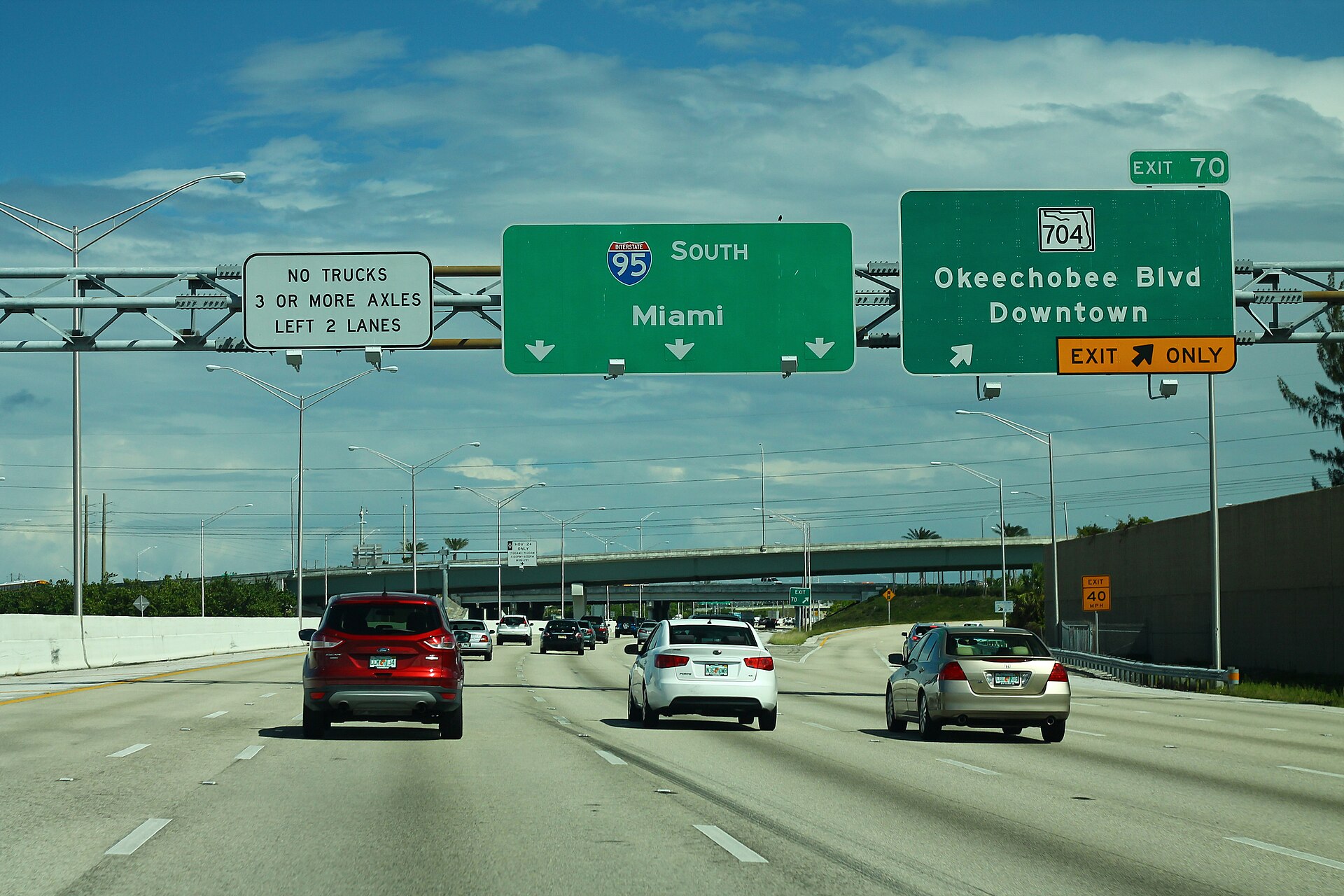
Florida's 2024 Traffic Crash Facts report counts 26,550 crashes, 16,564 injuries and 207 deaths in Palm Beach County. The same report lists 3,166 crashes involving commercial motor vehicles in the county that year.
Much of that traffic runs north and south on I-95, Florida's Turnpike and US-1, and east and west on Southern Boulevard, Okeechobee Boulevard, Glades Road and US-441/SR-7. In rear-end and turning crashes, the head can be jolted hard without striking anything. That is the kind of crash where a chart can say "no LOC" and a concussion can still be present.
What the diagnostic criteria actually say
In 2023 the American Congress of Rehabilitation Medicine published updated diagnostic criteria for mild traumatic brain injury (Silverberg et al., Archives of Physical Medicine and Rehabilitation). Under those criteria, a mild TBI can be diagnosed from observed clinical signs, or from two or more new symptoms combined with at least one clinical or laboratory finding, or from imaging. Loss of consciousness is one possible sign. It is not required.
The same criteria treat "concussion" and "mild TBI" as interchangeable when imaging is normal or not needed. The CDC describes a concussion as a brain injury caused by a bump, blow or jolt to the head, or by a hit to the body that makes the head and brain move quickly back and forth. The CDC also notes that a CT scan is not needed to spot a concussion, and that symptoms may not appear until hours or days later.
The coding reflects it too
The ICD-10-CM code set has a specific code for this situation: S06.0X0A, "Concussion without loss of consciousness, initial encounter." Separate codes cover concussion with brief loss of consciousness and cases where consciousness status is unknown. A diagnosis of concussion without passing out is a standard, coded clinical entity, not a gray area.
Loss of consciousness is one possible sign of a concussion. It is not a requirement.
Record details worth noticing
"Denies LOC" answers one question. It does not answer whether the brain was hurt. When Palm Beach County files are read closely, a few gaps come up often:
- No note on whether the client felt dazed, confused or "foggy" right after the crash, or had trouble recalling the moments around it.
- Neck and back findings documented in detail, while headaches, concentration, memory, light or noise sensitivity and fatigue go unasked.
- No follow-up note on symptoms that appeared days later, once the client returned to work or school.
- No standardized, dated measure of brain function after the crash.
Florida's PIP statute, section 627.736, ties medical benefits to initial care within 14 days after a crash. Early care protects the person's health first. A clearer record follows from it.
Palm Beach County makes up Florida's Fifteenth Judicial Circuit on its own. The main courthouse is in downtown West Palm Beach, with branch courthouses in Delray Beach, Palm Beach Gardens and Belle Glade.
Where testing fits
Testing decisions belong to the client's treating provider, such as a primary care physician, chiropractor, orthopedist or pain physician. When that provider decides testing makes sense, Braintree's mobile team performs concussion and TBI testing at the provider's own office in West Palm Beach, Boca Raton, Delray Beach, Boynton Beach, Jupiter, Palm Beach Gardens, Wellington and nearby communities. Scheduling is coordinated with the referring provider. Results are delivered as physician-reviewed diagnostic reports, giving the provider dated, standardized information to use alongside the clinical picture.
Learn more about concussion and TBI testing, see mobile testing in Palm Beach County, or check recent local crashes on the Palm Beach County Crash Map. Providers can send a referral.
Frequently asked questions
Can you have a concussion without losing consciousness?
Yes. Under the 2023 American Congress of Rehabilitation Medicine criteria, loss of consciousness is one possible sign of a mild TBI, but it is not required for the diagnosis.
What does "denies LOC" mean in a medical record?
It means the person reported that they did not lose consciousness. It does not, by itself, rule out a concussion.
Is there a diagnosis code for concussion without loss of consciousness?
Yes. In ICD-10-CM, S06.0X0A is "Concussion without loss of consciousness, initial encounter."
Can concussion symptoms show up days after a crash?
Yes. The CDC notes that some symptoms may not appear until hours or days after the injury.
Can Braintree test clients near West Palm Beach or Boca Raton?
When a client's treating provider decides testing makes sense, Braintree's mobile team tests at that provider's office and returns physician-reviewed diagnostic reports. Scheduling is coordinated with the provider.
Sources
- Silverberg ND et al. The American Congress of Rehabilitation Medicine diagnostic criteria for mild traumatic brain injury. Arch Phys Med Rehabil. 2023;104(8):1343-1355
- NLM Clinical Tables: ICD-10-CM S06.0X codes (Concussion)
- CDC: About mild TBI and concussion
- CDC: Symptoms of mild TBI and concussion (including danger signs)
- Nelson LD et al. Recovery after mild traumatic brain injury in patients presenting to US Level I trauma centers: a TRACK-TBI study. JAMA Neurol. 2019;76(9):1049-1059
- NIH, National Institute of Neurological Disorders and Stroke: Traumatic brain injury
- FLHSMV: Florida Traffic Crash Facts Annual Report 2024
- Florida Statutes s. 627.736 (2026): Required personal injury protection benefits
- Florida Statutes s. 26.021 (2026): Judicial circuits
- Fifteenth Judicial Circuit of Florida: Courthouses
- Florida Department of Health: Florida trauma centers (updated July 23, 2026)
- Health Care District of Palm Beach County: Trauma centers
Photo credits: Historic 1916 Palm Beach County Courthouse (now the Richard and Pat Johnson Palm Beach County History Museum), West Palm Beach, by Sharon Hahn Darlin, CC BY 2.0, via Wikimedia Commons. I-95 South at Exit 70 (Okeechobee Boulevard) by formulanone, CC BY-SA 2.0, via Wikimedia Commons.
This article is educational and is not medical or legal advice. If this is a medical emergency, call 911.